The success of evangelical youth culture in the 1990s has yielded a soul-searching generation of disillusioned exvangelicals in the first decades of the 21st century. Some of these have written books about their experience, and this paper examines the ways that their exvangelical deconversion narratives necessarily grapple with the conventions of the evangelical conversion narratives they had embraced before.
On her first visit to the Playboy mansion, Brenda Marie Davies met a movie star and got bit by a monkey, a pair of particulars either of which may have dominated the memory of that experience had both not been entirely consumed within the swirling anxiety that Jesus was watching. Having come up in the conservative culture of American evangelicalism and applied its tenets to her own life and choices, Davies floated breathless and tense through hallways, bedrooms, and grotto, among sensuous faces and bare skin, her mind and body engaged all the while with the oppressive conviction that she was a failure. Her invitation had come enveloped in seduction and her acceptance had disclosed her as a fraud. The central figure in a tale about and authored ceaselessly by herself, Davies had by then devoted nineteen years to crafting a storyline with contours, along a trajectory bound clearly for points more righteous than this. Like a plot twist in a bad movie, her arrival at the mansion violated the narrative arc, disrupting the exposition and invalidating her authorial labor. Only after a period of internal deliberation and a frantic call to her mother was Davies finally able to reconcile intentions with events, assuring herself in the end that her decisions had followed a rational—perhaps rationalizing—logic. After all, she reasoned, Christ spent his time with sinners, too.
Though unique in the details, Davies’ account is strikingly typical in the thematics, standing in for an entire genre of what are now colloquially dubbed “exvangelical” memoirs. Her book, On Her Knees: Memoir of a Prayerful Jezebel, recounts an obediently faithful childhood and a zealous adolescence followed by an early adulthood wracked with doubt, guilt, disillusionment, recrimination, and anger, expressed in rebellion and processed, often, as trauma. Like many other exvangelical memoirists, Davies is left at once embittered and activated by the formative experiences of her younger self, resentful of the narrative that she allowed to shape her understanding and inspired to help others avoid its darker effects. Also like her peers, Davies necessarily performs this introspective work within and upon that same narrative scaffolding, hammering away at the beams and boards without restraint but also without the power to break entirely through the protections they have promised or the limits they have imposed. For better or worse, these mark the durable legacy of a simple and resilient storytelling tradition.
Though less liturgical than its mainline cousins, evangelical Christianity does subscribe to at least one ceremonial speech practice—the sharing of personal testimony. Generative of social connection and communal bonding, testimony provides a clear and coherent storyline that the faithful may employ to order, understand, and narrate their lives. Common practice at church services, youth groups, camps, and conferences, the sharing of testimony is second nature to practicing evangelicals, and a key element of their initiation and training. In every case, it is modeled upon one of two narrative arcs—the story of Paul’s conversion on the road to Damascus, or the parable of the Prodigal Son—each relaying a tripartite structure of sin, repentance, and redemption. Like many other Bible stories, these provide readers with resources for making sense of human life. But unlike many others, these have been adopted and deployed by countless Christian ministries as rhetorical templates to be studied, learned, and mimicked. I am interested in such narratives as rhetorical scripts from which believers continually read, by which their lives are oriented, and against which they sometimes revolt.
The testimony script is powerful because it is modeled upon a larger three-part narrative that defines the evangelical worldview. For evangelicals, a literal reading of Genesis documents the decline of human nature into sin, creating a rift between man and God. Because of this rift, human beings stand condemned for their rebellion, and doomed to an eternity of separation. However, because of God’s love for humanity, he sends his son to earth in human form, both to minister to the people and to die a sacrificial death on their behalf. By laying down his life, despite his innocence, Christ satisfies the demand for divine justice, paying the penalty incurred by sinful human beings. Finally, an offer of grace is proffered, through which people may be forgiven and redeemed, simply by acknowledging Christ’s sacrifice and believing in his divinity. By confessing their sins, seeking forgiveness, and being born spiritually again, Christian converts model their own life stories on the greater narrative of human history, effectively serving as embodied synecdoche for the human condition.
This is all fine so far as it goes, unless and until the believer loses faith. At that point, the very cohesiveness of the account becomes a serious liability with which the now ex-evangelical must grapple. Because the evangelical youth movement was so wildly successful in the 1990s and early aughts—fueled by its strong emphasis on apologetics and personal purity—and because the graduates of that training came of age and applied its tenets to mixed effect in the years since, there has been an influx of exvangelical memoirs published in the past two decades or so. In preparation for this essay, I read about a dozen of these, looking for common experiences, arguments, and themes, and always attentive to the ways in which they rely upon or respond to the evangelical testimony script. The result is an argument about the exvangelical experience, of which I am also a veteran. In the first part, I situate evangelical testimony and exvangelical memoir within the purview of narrative analysis, explaining how these describe and dictate the experiences of their authors. In the second, I analyze these narratives through the lens of three common themes—apologetics (or the logos of the narrative), purity (the ethos), and trauma (the pathos). Along the way, I demonstrate that the life and the afterlife of an evangelical faith are consciously crafted according to shared narrative conventions, each entirely congruent with the uniquely American desire to begin again (and quite possibly again) when a particular life path has run its disappointing course. As I show, Brenda Marie Davies’ experience is at once unique and not, given the commonplaces on which these narratives are constructed.
Matthew Dallek is Professor of Political Management at George Washington University. In his most recent book, he identifies the John Birch Society as the vanguard of an insurgent right-wing extremism in American politics. Known for their early embrace of conspiracy theories, wild accusations, violent rhetoric, and big donor funding, the Birchers doggedly pursued the future we inhabit today.
The end of World War II rolled a wave of American triumphalism and prosperity, effectively launching an (at least) eighty-year stretch that we now know as the “Great Acceleration” and lifting the United States into global superpower status. At the time, these developments were generative of broad optimism. As Walter Lippmann put it, “What Rome was to the ancient world, what Great Britain has been to the modern world, America is to be for the world of tomorrow.”
And yet, for some on the far right of the nation’s politics, the Truman and Eisenhower administrations warranted only alarm. They were too soft on communism, too indifferent to the free market, too deferential to the nation’s poor and racial minorities. Their investments in national health care, civil rights, the progressive income tax, and education suggested a bipartisan endorsement of the New Deal agenda and a troubling tolerance for collectivism. To the well-heeled right-wing, this was all an American apostasy.
And so, in 1958, candy millionaire Robert Welch set to work organizing a network of rich, white, conservative men—not demographics he specified, necessarily, but those he drew—committed to defying communist infiltration with free market principle. From that initially small circle of wealthy elites, Welch expanded into the grassroots, drawing tens of thousands of “white, upwardly mobile, change-fearing, mostly Christian, often suburban men and women,” who devoted their time, energy, money, and talent to spreading the gospel of what he called the “John Birch Society” (JBS).
(John Birch, incidentally, was not affiliated with the Society—he was an Army intelligence officer and Baptist missionary who had been killed in China immediately following World War II, and who Welch selected as patron saint of the anticommunist cause. There’s no way to know what Birch would have thought about his posthumous immortality, crafted by others using his profile without his consent, but it is interesting to wonder.)
In the early years, the Birchers were mocked and maligned, recognized—when recognized—as a bunch of kooks and crackpots who saw communists in every corner. Perhaps mostly famously, Welch hoisted the disgraced banner of McCarthyism, accusing even Dwight David Eisenhower of being a tool of the communist conspiracy. In the pages of National Review, William F. Buckley dismissed Welch on these grounds, closing the gate on Birchism and so declining to escort American conservatism into the realm of fever-brained conspiracy. By 1964, when the JBS championed Barry Goldwater’s extremism all the way to a landslide defeat, there was good reason to believe—perhaps to hope—that the right’s great experiment in paranoid delusion had run its ignoble course. But the Birchers disagreed.
Matthew Dallek’s Birchers: How the John Birch Society Radicalized the American Right tells this story and its aftermath, recounting the JBS in both activity and legacy. The activity was primarily situated in the long 1960s, between the founding of the JBS in 1959 and its supposed decline in the early 70s. Dallek is thorough on these details, providing what is likely the most comprehensive look at the movement in its heyday. Manned by an odd mix of wealthy conspiracy theorists, anti-statist lunatics, avowed racists, and concerned “little old ladies in tennis shoes,” the JBS became a political force of the Cold War era, motivated by a portfolio of distinct but overlapping fears—communism, civil rights, feminism, secularism, etc. The Birchers were dedicated activists, tireless recruiters of new membership, merciless harassers of their foes, and unflappable true believers in the kaleidoscope of conspiracies alleged to have shaped the disordered world in which they lived. A useful foil for the left, they also provided a buffer for the more respectable right, which held them at arm’s length to stake a claim on the center.
The legacy has suffused everything after, from the end of the Vietnam Conflict and Nixon’s resignation through the Reagan Revolution, Newt Gingrich’s 1990s, Rush Limbaugh, Fox News, the Iraq War, the Great Recession, Citizens United, and a pair of non-consecutive Trump administrations. Dallek argues that, even in apparent defeat, the Birch Society proliferated and persevered, dispersing into parallel movements and ingraining its postures, assumptions, and methods deeply into the psyche of the American right, such that its unmistakable influence would still be felt for decades to come. Here, too, he is detailed, noting the particulars within a broad set of trends that speak loudly for themselves. One needn’t squint too sharply to see Robert Welch’s spirit moving amid the Moral Majority, the Christian Coalition, or the Concerned Women for America, to say nothing of the National Rifle Association, the Tea Party, or the Moms for Liberty. It enveloped the Capitol on January 6.
Dallek’s book has many strengths, but perhaps the strongest is his deft way of capturing the devil’s bargain made between the mainstream- and far-right between 1960 and 2025. Even Buckley’s critics have been happy to acknowledge his rejection of the John Birch Society during the Kennedy Administration, citing the move as evidence of some core commitment to moderation or sense. But as Dallek is careful to document, Buckley didn’t reject the JBS as a package—he rejected a politically toxic association with Robert Welch while working to harness the toxic political energy that Welch had unleashed in his legions of call-making, door-knocking, money-donating followers.
In microcosm, this is the story of how Republican elites have interacted with every extremist element that has arisen on their right horizon in the decades since—keep it at bay, withhold official support, and make quietly clear, through nods and dog whistles, that interests might be shared, agreements might be reached. But with time and incentives a flirtation becomes a marriage. By now most of the old elites are gone—dead or primaried, cowed or converted, and the fringe is at the helm. In Trump 2.0 we witness the culmination of six decades, the final triumph of an improbable, marginal, paranoid, right-wing, anti-statist, extremist movement that never gave up.
Joseph Darda is Associate Professor of English at Michigan State University. The author of several books about race, culture, and politics, Darda is here concerned with how white men responded to the civil rights and feminist movements in the years following the Vietnam War. He argues that the veteran was made to serve as a competing identity category, available to white men whether or not they had served.
And yet, to stress the marginality of any American movement committed to white supremacy, free markets, and small government is perhaps to repeat the mistake of those 20th century liberal historians who wrote these impulses out of the national character without pausing to appreciate their central place within it. The right wing has always tacked a straight line to the center of American politics, its ideas and initiatives enjoying built-in demographic advantages even when they were ugly and bad. Sometimes those advantages have been augmented by events that cast the whole project in a more sympathetic light.
The American triumph in World War II was followed, shortly, by stalemate in Korea, some early losses in the race against Russia, and then by quagmire in Vietnam, the largest and most disastrous of the Cold War proxies. The United States shipped nearly three million soldiers to southeast Asia during the course of that conflict, and nearly 60,000 of these died. Back home, in the meanwhile, a vocal anti-war movement arose alongside the civil rights push already-in-progress, then both were joined by “second wave” feminism and a gay rights movement demanding equality for American women and sexual minorities, respectively.
As the war effort collapsed, the troops—about 90 percent of whom were white men—returned in defeat, disappointment, and often in trauma to a nation undergoing revolutionary social changes that excluded them as a matter of course. According to Joseph Darda, in his How White Men Won the Culture Wars: A History of Veteran America, the Vietnam vet and his vocal civilian allies acclimated to this new environment by adopting an identity category of their own—something like the “Veteran-American.” The built-in ethos of this identity allowed white men to reclaim privileged status in the social upheavals of the moment, whether or not they had actually served in Vietnam.
To make this case, Darda observes, first, that the now-pervasive acknowledgement of “trauma” as a formative experience dates to the Vietnam era, when social workers at the Boston Veterans Administration Hospital undertook an ambitious program of interviews with returning veterans, paying special attention to the psychological residues of their combat experience. In 1980, this work culminated in the addition of Post-Traumatic Stress Disorder to the third edition of the Diagnostical and Statistical Manual of Mental Disorders, and the formal recognition that soldiers continued to suffer for their service even after their tours had ended.
A significant event in itself, Darda notes that the establishment of PTSD as a diagnosis participated in a revision of the national mindset toward war, such that the returning veteran was admired “not for his valor, but for his suffering.” Because the majority of suffering vets were white men, the resultant white allowance “confused the real suffering of vets, including veterans of color and non-American veterans, with white racial interests that tended to serve white elites who hadn’t served,” like Ronald Reagan, Pat Buchanan, George W. Bush, Dick Cheney, and Donald Trump, to name a few. By loudly claiming to stand for veterans, these and other non-vet, white public figures bought a service ethos on the cheap.
To support his claim that veteran-ness rose to the level of an identity category around this time, Darda notes, next, that it featured prominently in the art that emerged from the conflict, especially in literature, music, and film. These are engrossing chapters that argue a political point via art criticism. In the work of veteran-novelists like Tim O’Brien, Larry Heinemann, Robert Olen Butler, and Philip Caputo, for example, the combat experience captivated the reading public, which bought their books by the millions and turned each into a literary celebrity. Asked in interviews whether their service had shaped their writing, they bristled. More than once O’Brien drew an explicitly racial analogue. “It’s impossible to answer,” he said. “It’s like asking Toni Morrison, ‘What has being black contributed to your being a writer?’” Later, when Heinemann’s short novel Paco’s Story won the 1987 National Book Award—beating out Toni Morrison’s Beloved—the priority of Veteran- over African-American stories in American literature seemed to have been achieved.
For musicians, the post-war years saw the iconic 1960s Vietnam-era soundtrack give way to an ascendant “heartland rock” driven by up-and-coming non-vets like John Mellencamp, Tom Petty, Pete Seger, and Bruce Springsteen. Their hit songs focused on the rural, small town, hardscrabble, implicitly white experience of the American heartland, to which Vietnam vets had returned and from which the working class struggled to rise. Their work depicted a nation in decline, the white American dream broken by the war across the sea and the concurrent social revolutions at home. At the same time, the hard-driving rhythms and patriotic themes of hits like Springsteen’s “Born in the USA” radiated a defiant nationalism that appealed to both conservative Republicans and liberal Democrats. In this, Darda suggests that heartland rockers—especially Springsteen—helped initiate a white reunion of sorts, as white citizens divided by the war came together again to commiserate in its aftermath.
In Hollywood, finally, the Vietnam experience was rendered by many famous directors, including Francis Ford Coppola, Oliver Stone, and Stanley Kubrick. But for most Americans, the Vietnam veteran experience was most famously represented by Sylvester Stallone’s John Rambo in First Blood. (Another famous non-vet, Stallone had expatriated to Switzerland to avoid the draft.) Part of a larger re-ethnicization of disparate white identities—Irish, Italian, Pole, Slovak, etc—after the war, Stallone’s concurrent roles as Rambo and Rocky Balboa dominated theaters in the 1980s, establishing a type of tenacious, blue collar, white ethnic hero who would beat the sort of odds faced by African-Americans during civil rights. In First Blood, the veteran Rambo becomes the disenfranchised Black citizen of the south, harassed by belligerent police enforcing an arbitrary vagrancy law and blasting him, at one point, with hoses before escorting him to jail. In Rocky, Balboa fights the good fight against Apollo Creed—a wealthy, cocky, and fully established Black anti-hero—losing in the end but proving the white ethnic capacity to out-suffer those supposedly lower on the American caste ladder.
Darda’s book makes a provocative and thoughtful case, documenting how American white hegemony was challenged, sundered, and ultimately re-established during and after the Vietnam war, focusing on the special role of the Veteran-American within this process. As white Americans focused their attention upon white sacrifice and suffering, that of racial and sexual minorities–as well as all southeast Asians–fell quickly out of focus. Like the determined activism of the John Birchers, the rhetorical deployment of the white veteran ethos—sometimes by veterans but very often not—played a critical role in guiding the late 20th century political and social currents that have brought us here and now in the 21st. They don’t explain everything, but they explain a lot, and in times like these every bit of context helps.
Steven Hahn is Professor of History at New York University. His previous books, The Roots of Southern Populism, A Nation Under Our Feet, and A Nation Without Borders, have won many prestigious awards.In his latest, Hahn shows how American politics have been shaped by antagonism between group identities and communities, rather than individuals in pursuit of liberty.
Following Donald Trump’s election to the presidency in 2016, commentators, pundits, and scholars around the nation set to work on lectures, articles, and books decrying the rise of an illiberal democracy in the United States. Founded upon an extant literature about comparable governments abroad, these writers expressed a concerted concern that the United States had broken with its past and turned instead in a new and dangerous direction. Now that Trump has been elected again, in 2024, these alarms are certain to resume their ring. But even as we listen, we should place Trump’s profile in proper perspective by acknowledging that at least two things can be true at the same time. The first is that, yes, Trump is a different and more aggressively illiberal leader than those we’ve had in the past. The second is that, no, the United States has not been, until now, a paragon of liberal democracy.
This point is cleanly made and thoroughly documented by Steven Hahn in his 2024 book, Illiberal America: A History. The argument is textured, but the gist is that the political culture of the United States has been shaped by a variety of currents, at least one of which was liberal but was washed always among swiftly illiberal others. Though we commonly think of the US as a land in which individual rights and liberties form the political bedrock, this too-easy characterization obscures a few centuries of political-social life defined by group dynamics, when a stratified pyramid of demographics facilitated the subjugation and/or expulsion of those on each successive margin. This is the history that has given us the sinister profile of the white male, the narrowly defined and highly privileged figure who ruled over the rest, especially when wealthy. From that pinnacle, though, the racial, religious, national, gendered, propertied, and related category exclusions have proceeded steadily downward and out, pushing in turn against the American Indians, the Blacks, the Mexicans, the Chinese, the women, the Jews, the Catholics, the Irish, the beer-drinking non-English-speaking eastern and southern European immigrants in general, the poor, the workers, the communists and alleged communists, the Muslims, the gays and lesbians and transgenders, etc.
Throughout American history, in other words, your identification with a particular status group has mattered much more than your political integrity as an individual with rights.
The misconception that the United States was, is, and may yet be the manifest ideal of liberalism is owed primarily to the dedicated work of the post-New-Deal, mid-twentieth-century historians who established the idea in the minds of their influential readers. Important writers like Louis Hartz, Richard Hofstadter, Daniel Boorstin, Lionel Trilling, and the rest of their cohort emphasized American liberality in their work, effectively recasting the nation in a not-exactly-wrong but still-aspirational light. This effort was widely successful, buttressed and expanded especially by those prominent liberals who saw America always in a state of becoming the land they had always hoped it would be. By the second decade of the twenty-first century, they had come to believe it all so completely that Trump’s election felt like a fracture in the timeline, a narrative infidelity. And yet most of these also knew their history well enough to concede, on second pass, that it wasn’t so unusual after all.
Hahn’s book is comprehensive, moving longitudinally and supporting his thesis with candid evidence at all points between the colonies and the present. In his careful telling, the land that became America was defined all along by sequential waves of vilification and exclusion, shaped by a shifting matrix of identity politics that targeted each ascendant group the very moment its ascent was recognized. The natives were to be conquered, converted, enslaved, or expelled, and replaced, then, by endless shiploads of shackled migrants. These indentured servants and slaves provided the labor force to realize a new feudal dream, usually losing their health and their lives long before anything like freedom arose on the other end. The nation they built with their backs and their hands grew and complex-ified and stratified, acquiring new land and building new institutions while swelling with new arrivals and pushing ever westward toward the Pacific. At one point, it split in two and the citizens fought each other in an exceedingly bloody war over whether or the not its peculiar institutions could persist. Afterward, this chaotic, contentious, and very often violent exercise in nation-building rolled on in patchwork, tribal fashion, through segregation and discrimination and Jim Crow and ethnic neighborhoods and all the rest, driven by suspicion, recrimination, and division, and culminating here and now in what Hahn calls, ominously, an “era of illiberal darkness.”
But in acknowledging the danger, he disavows the surprise. Illiberalism has never been peripheral to American life. On the contrary, he writes, “It is usually nourished by the ‘community’ and expressed by the community’s ‘will,’ however the ‘community’ may be understood.” In that sense, America can’t be great again. It can only hold itself to a higher, as yet unmet standard.
Isabel Wilkerson is the author, previously, of The Warmth of Other Suns, an award-winning account of the Great Migration between World War I and 1970.In Caste, she examines social distinctions in several different caste societies, arguing ultimately that, in many ways, the United States, Nazi Germany, and contemporary India were shaped by comparable beliefs, assumptions, and systemic social forces.
Or, in other words, the stratified, group orientation informing American history amounts to a caste system. In her 2020 book, Caste: The Origins of Our Discontents, Isabel Wilkerson makes this case in language consistent with Hahn, and starts from precisely the same place, looking incredulously back on those disillusioned Americans who greeted Trump’s first election with shock and disbelief. “‘This is not America,’ or ‘I don’t recognize my country,’ or ‘This is not who we are,’” they said. Actually, Wilkerson replies, “This was and is our country and this was and is who we are, whether we have known or recognized it or not.”
From there, her book relays a discomfiting history that roundly exposes the liberties taken by Hartz and Hofstadter and the rest in their focus on American individuality, a privilege reserved, she writes, for select members of the dominant caste. If you were Black in the nineteenth century—or, in many venues, if you are Black today—the particular texture of your individuality is likely to be concealed behind the simple fact of your blackness in the judgments and assumptions of those who pass through your orbit. You are, to them, first and foremost a type, and beholden to the traits and constraints with which the type is associated. The same is true if your people come from some East or South Asian nation, or from Latin America, or if you’re Jewish or Muslim or Hindu, or if you’re part of the white working class, or otherwise likely to be lumped quickly into a category.
“A caste system,” she writes, “is an artificial construction, a fixed and embedded ranking of human value that sets the presumed supremacy of one group against the presumed inferiority of other groups on the basis of ancestry and often immutable traits, traits that would be neutral in the abstract but are ascribed life-and-death meaning in a hierarchy favoring the dominant caste whose forebears designed it.” The system “uses rigid, often arbitrary boundaries to keep the ranked groupings apart,” and it “endures because it is often justified as divine will, originating from sacred text or the presumed laws of nature, reinforced throughout the culture and passed down through generations.”
This is an accurate description of the Black experience in America, certainly the Native-American experience, and has applied in different ways to different others along the way, depending on when and where they made their entrance into the ranks.
Though the arrangements she describes are familiar, some readers may recoil when Wilkerson characterizes them as castes, a primitive and dehumanizing concept unbecoming in the land of the free. Certainly the recent enthusiasm for “patriotic” histories of the United States would not be comfortable with this. But one of the great virtues of the book is that Wilkerson brings so many receipts, noting that many others have made this association before.
Massachusetts Senator Charles Sumner characterized racial segregation as a caste system in the nineteenth century, noting that “Caste makes distinctions where God has made none.” In 1916, eugenicist Madison Grant wrote approvingly of the caste system in India, identifying it as the means by which the upper classes “preserve the purity of their blood,” and adding that “In our Southern states, Jim Crow cars and social discriminations have exactly the same purpose.” In 1942, anthropologist Ashley Montagu wrote that, “When we speak of the race problem in America, what we really mean is the caste system and the problems which that caste system creates in America.” In 1944, Swedish economist Gunnar Myrdal wrote, in his An American Dilemma, that the effort “to maintain the color line has, to the ordinary white man, the function of upholding that caste system itself, of keeping the ‘Negro in his place.’” And on and on.
To suggest that the United States of America has been built upon and stratified around an elaborate system of castes is to invite comparisons to Nazi Germany and contemporary India, neither of which is bound to flatter the American self-concept. And yet Wilkerson explores these analogues very deliberately and finds them compelling.
In the first case, she provides the contemporary documentation that, not only did the Nazis look to the US for examples of how to codify their racial hierarchy in law, they puzzled over how the US had managed to implement such strict racial boundaries—more rigid, even, than Australia or South Africa—and yet still “to retain such a sterling reputation on the world stage.” Some Nazi intellectuals, like the writer Herbert Kier, “thought American law went overboard,” and tried initially to settle on a more moderate approach.
To Indians, the parallels are obvious. In 1959, Martin Luther King, Jr. visited India, hoping to learn more about the tradition of resistance to colonialism and caste. When his host introduced him to a group of dalit high school students as “a fellow untouchable from America,” King felt “a bit shocked and peeved” that he would be characterized in this way. Upon some reflection, though, he had to concede the similarities. “Yes,” he told the group, “I am an untouchable, and every Negro in the United States of America is an untouchable.”
Caste is a very focused and thorough book that weaves history, sociology, psychology, and the author’s personal experiences together in defense of a very exacting thesis. It pairs well with Illiberal America to challenge the misty national nostalgia embraced by so many on the political right and some still on the center-left.
Charles King is Professor of International Affairs and Government at Georgetown University. The author of eight books, King is here concerned with the circle of anthropologists around Columbia University Professor Franz Boas in the 1920s, who challenged the popular belief that categories like race, sex, and nationality were determinitive of intelligence, ability, and potential.
The pervasiveness of that nostalgia should demonstrate that, to a considerable extent, the misremembering of history is less a partisan project than a general human tendency. We all make our contributions, and one of the unsung benefits of living in a time of such prolific historical scholarship, networked libraries, and affordable paperback editions is that we have an unprecedented opportunity to get the story right or, at minimum, less wrong in our own minds. And yet, as Mark Twain said, the man who does not read books has no advantage over the man who cannot read them, and between you and me sometimes the state of our discourse and the trend in our politics makes me wonder how far and in which directions the benefit of nearly universal literacy is being pressed today.
It’s a bit of a digression except that, as Charles King explains in his Gods of the Upper Air,the more accurate take on the human condition is generally a minority view and often radically at odds with the prevailing consensus. Back in the late nineteenth and early twentieth centuries, when Franz Boas was emerging as one of the world’s most provocative thinkers and building a circle of admirers at Columbia University, the “standard view of human society was that differences of belief and practice were matters of development and deviance.” A “more or less straight line ran from primitive societies to advanced ones,” and you could rank those societies from most advanced (white, western European and America) all the way down through the most primitive (Black, African, Native American, outlying Pacific Islanders) as though viewing human evolution and development from the side, like a hominid chart. This thinking was instrumental in guiding our social institutions and political economy as recently as the second World War, a cataclysmic event that was itself largely produced by such thinking.
A German immigrant to the United States, Boas published and lectured widely on the concept of culture, arguing persistently that cultural ideas shape our thinking, action, and lifestyles far more than mere genetics or any natural tendency toward racial progress. “The social categories into which we typically divide ourselves, including labels such as race and gender, are at base artificial,” he argued, “the products of human artifice, residing in the mental frameworks and unconscious habits of a given society.” Though widely resisted in academia and beyond, these claims were appealing to some precocious—eventually famous—young researchers, including Margaret Mead, Ruth Benedict, and Zora Neale Hurston, who became his protégés.
They called their work “cultural anthropology,” and set off into the world to study human cultures in their own settings, on their own terms, without imposing any of the top-down assumptions standard to the hierarchical thinking of the day. Boas had made his name among the Inuit, Mead went famously to the South Pacific, Hurston to the southern states. Benedict stayed mostly in New York, but wrote brilliantly while holding them all together in her correspondence. They wrote each other, competed with each other, sometimes fell in love with each other and had affairs with others along the way, each eventually garnering biographers and so turning the study of human life into a human life worthy of study.
Their great insight, King writes, was that “no society, including our own, is the endpoint of human social evolution. We aren’t even a distinct stage in human development. History moves in loops and circles, not in straight lines, and toward no particular end. Our own vices and blind spots are as readily apparent as those of any society anywhere.” They were “dismissed from jobs, monitored by the FBI, and hounded in the press, all for making the simple suggestion that the only scientific way to study human societies was to treat them all as parts of one undivided humanity.”
King’s book offers a fitting capstone to a read through Hahn and Wilkerson because of his comparatively narrow focus. After reading through those large and sweeping histories, Gods of the Upper Air focuses us specifically at one important moment, if stretched across decades and traveling ‘round the world. In that moment, between the wars, we witness a new and compelling worldview being born and immediately challenged by a cranky status quo. This was the era of eugenics, remember, in which these old ideas about racial stratification and genetic inferiority were operationalized in state-sponsored sterilization programs and used to justify a host of toxic laws and Supreme Court rulings. They perpetuated colonialism and Jim Crow and the successive lives of the Ku Klux. Like Wilkerson, King dwells at length on the various ways that American racism served as inspiration and policy model for Nazi-brand anti-Semitism. And so any concern that these writers paint with a brush too broad evaporates here amid the many fascinating and granular details. It’s an awesome book.
Reading these three titles in this order is liable to reorient and certain to clarify your thinking about some of the (still!) most provocative matters around race, gender, and history dividing the American people today. To me, they make our moment very intelligible, and for that reason all the more disappointing. But to be clear these are not downer books, and they are not anti-American in the sense so often alleged. They demonstrate that, as James Baldwin once put it, “American history is longer, larger, more various, more beautiful, and more terrible than anything anyone has ever said about it.” And after nearly four centuries on these shores, we really should be learning from all of this. Going forward, in our lives, our work, and our politics, we might aspire to make America great for everyone, for the first time.
Benjamin E. Park is Associate Professor of History at Sam Houston State University. His books, Kingdom of Nauvoo: The Rise and Fall of a Religious Empire on the American Frontier and American Zion, provide a comprehensive view of Mormonism from the first revelations of Joseph Smith through the presidential ambitions of Mitt Romney. Together, they provide an introductory course in an American original.
Of all the novel American social-sexual arrangements in the antebellum years, from the strenuous celibacy of the Shakers to the untethered free love of Berlin Heights, perhaps no experiment has proven so durable to fame as Joseph Smith’s venture into plural marriage. A radical innovation that came to define the Latter-Day Saints and to delay Utah statehood for a period of decades, Mormon polygamy began as yet another accord between Smith and God, a secret covenant that granted the prophet rights to do things that he had wanted to do anyway, and at the very moment it first seemed plausible to do them without consequence. In both his Kingdom of Nauvoo and his more recent American Zion, Benjamin Park does an admirable job of recounting these events with candor, somehow threading a narrative needle between credulity and cynicism.
Though American Zion is the obvious choice for readers in need of a sweeping Mormon history, Kingdom of Nauvoo is the more granular and—in my view—more captivating take. Probably most readers don’t know that much about the saga of Nauvoo, so practically every page is a revelation. And yet I keep returning to one detail in particular, a representative anecdote that captures Smith’s psychology, his brazenness, and the remarkable influence he must have wielded over those in his orbit. It explains how he was able to generalize plural marriage, moving it beyond the confines of his own private practice and making the case for its adoption by others in the community.
That story centers upon Sarah Ann Whitney, one of more than two dozen women Smith married in secret before his first wife, Emma, found out. Whitney was 17-years-old in July of 1842; Smith was 36. By accounts an exceptionally attractive girl, she was also the daughter of prominent Mormon parents. When Smith approached Newel Whitney to ask for his daughter’s hand, he came with a written proclamation—written, that is, in the voice of God—promising an eternity of honor and immortality to the entire Whitney household once the couple was sealed. Whatever reservations they may have felt about gifting their daughter to an already—in fact, many times over—married man, the offer was too good to refuse.
But though the marriage itself raises a host of questions and red flags, the situation became much more interesting the following spring, when Smith was confronted by a seemingly foreseeable problem. Sarah Ann Whitney was, in the eyes of Nauvoo’s young gentlemen, a very eligible bachelorette. No one knew that she was married to Smith, so she had both many callers to reject and no obvious reason to reject them all. Smith realized quickly that he needed a way to remove her from the dating pool without drawing any unwelcome attention to himself. He found that way in the sympathetic figure of a grieving widower, Sarah Ann’s uncle-by-marriage, Joseph Kingsbury.
Caroline Whitney Kingsbury had died the previous October, leaving her husband alone to raise their infant child. He was still very much in mourning when Smith came to him with a novel proposal. If Kingsbury would agree to be joined to Whitney in a “civil union”—not actually a marriage but something that looked to the residents of Nauvoo exactly like one—then Smith would seal him to his beloved Caroline for all eternity. When Kingsbury agreed to the scheme, he helped inaugurate a theological advance. If men and women could be united in civil bonds til death do they part, they might also be united spiritually in ways that death could not break, and this process might be formalized whether the spouse was living or dead.
Before long, a growing number of Mormon men were pursuing eternal seals with their lost wives, even in cases where they had already remarried and established such seals with their new brides as well. Though one wife was living and one (or more) dead, the man who secured these seals could already consider himself to have multiple wives, in a spiritual if not a physical sense. Looking ahead to the endless span of eternity, when all would be joined together forevermore, the matter of whether one or two or none of these wives were dead on earth seemed to matter less and less. Introduced and expanded gradually, starting with those—like the prophet’s moralistic brother Hyrum—who had loved and lost, it helped make polygamy palatable to many who might otherwise have rejected it out of hand. And it took off from there.
Polygamy was still noxious to just about everyone else, though, and the already swirling rumors help explain why the Mormons were run out of New York and then Ohio and then Missouri before Joseph and Hyrum Smith were lynched in Illinois, and why Brigham Young then bade America adieu entirely and started his people on the long western march to the Great Salt Lake, where polygamy persisted for most—but not all—of the rest of the century. From one vantage, the doctrine of plural marriage appears little more than a patriarchal swindle that permitted prominent men to have sex with several—even dozens—of women without violating social-religious standards of propriety or compromising their status as pillars of the community. Considered more generously, it was a complex social arrangement that empowered the prophet to bind his people tightly together in a cohesive matrix of interlocking and overlapping relations that would persist into infinity. My own judgment leans decidedly closer to the first of these interpretations. But the intricacy of the thing makes you wonder.
Ellen Wayland-Smith is Professor of Writing at the University of Southern California. Her book, Oneida: From Free Love Utopia to the Well-Set Table, documents the strange evolution of John Humphrey Noyes’ religious sect, from a collection of avowed Christian communists practicing “complex marriage” in the nineteenth century to a straight-laced, middle-class silverware company in the twentieth.
If Joseph Smith was perhaps the most audacious of the 19th century’s religious-political-sexual innovators, he did not run unopposed. The perfectionist minister and self-proclaimed prophet John Humphrey Noyes also warrants consideration, and his contemporaneous Oneida Community rivals Nauvoo in a number of significant ways. Ellen Wayland-Smith’s Oneida: From Free Love Utopia to the Well-Set Table offers the most recent—and most comprehensive—account. Though the Latter-Day Saints appear here only in passing, the parallels between the Mormons and Wayland-Smith’s Oneidans are uncanny.
Like Smith, for example, Noyes declared a direct connection to God that justified both his critique of the prevalent social norms and his exploration of alternative arrangements. Also like Smith, Noyes’ revelations authorized him to have sex with lots and lots of women without forfeiting his claim to decency. And here again, Noyes founded his enterprise upon an apparatus of high-toned theological concepts that persuaded a bunch of perfectly respectable people to join in. If you end up thinking that Noyes did all this mostly just for the sex—as I mostly do—you still have to grapple with the complex theological reasoning that he used to validate his behavior.
Here’s the background: Starting in the 1830s, when upstate New York and New England were still much in the throes of the Second Great Awakening and its attendant millennialism, the young minister Noyes came to believe himself a special representative of God on Earth. (In this, he was not so dissimilar to Charles Grandison Finney, William Miller, or Lyman Beecher, to say nothing of Joseph Smith. If not in the water, special election seems to have been in the air.) Like many of the reformer class, Noyes condemned a pronounced selfishness in American society and sought means to correct it. He did so at the level of the family, through which individuals claimed ownership of their partners and children, and from which they laid claim to other people, properties, and assets. If this impulse were to be overcome, Noyes argued, Christians needed to become communists.
The Christian communism Noyes envisioned was realized finally in the 1840s and founded upon an institution that he called “complex marriage,” an arrangement by which all exclusivity was dissolved and every man in the community was in a sense married to every woman, and might therefore enjoy the conjugal benefits of each and all. No individual person could stake a claim on the life of any other, nor entertain feelings of jealousy in any justifiable way. To prevent rampant pregnancies, the men in the community practiced “male continence,” stopping somewhat short of full consummation. When babies were born, they were raised by the community in communal settings, denying parents any exclusive claim to their children. If any particular couple wished to have a child together, they had to apply to the community leadership for approval, which was granted or not based on the spiritual quality of the child that the couple seemed likely to produce. Sometimes those applications were approved. Otherwise, pairings were assigned. In either case, Noyes pioneered a form of spiritual eugenics not entirely dissimilar to the physical variety that would arise in the early 20th century.
By 1845, when the new reforms were up and running and his Oneida community first beginning to flourish, Noyes had developed a theory of sexuality that drew on the early science of electricity, culminating in a theory of “electric sex.” The gist is that human beings are endowed with a life force traceable to Christ himself, and that this force can be transferred from person to person, growing in intensity with each transmission. A community of Christians bound by diverse connections would thus function as a spiritual battery, generating and containing enough electric potential to nurture health, ward off disease, and raise its members ever closer to true immortality. This sort of spiritual-physical growth took priority at Oneida, set against the compulsive, selfish, money-making obsession of the outside world. That was the appeal.
Unsurprisingly, though, Noyes’ sexual theory and practice found their way eventually into some extremely creepy places. Most disturbingly, Noyes took it upon himself to initiate all of the community’s girls into sexual experience immediately upon completion of puberty, around the average age of thirteen. There is also evidence that Noyes hoped to begin approving brother-sister sexual unions, and eventually to father a child with his own daughter. “Avuncular unions,” between uncles and nieces were already commonplace at Oneida. Eventually, the in-bred condition of the community would inspire Edgar Allen Poe’s story “The Fall of the House of Usher.”
By the end of the 1870s, the Oneida Community had collapsed under the weight of Mormon-inspired anti-bigamy legislation and Noyes had expatriated to Canada. Thus began the second life of the community, in which a group of avowed communist non-conformists began a transition to perfectly normal, bourgeois respectability by dropping the weird sexuality and leaning instead into the production of fine and affordable silverware.
Ultimately, both the Mormons and Oneidans buckled under political pressure and abandoned key elements of their belief systems. In hindsight, though, those key elements look a lot like the lecherous predilections of their all-too-human god-complex founders. That’s not to say that their social critiques were entirely wrong, or that middle class normalcy is necessarily right. But these parallel trajectories remain engrossing in themselves. They disclose a foundational libido at the base of very high-minded systems.
Perhaps the foremost philosophical and literary figure in all of American history, Ralph Waldo Emerson is a challenging and sometimes mystifying writer. The books on this list are arranged in hope of making his life and work more accessible, and his insights somewhat more applicable to contemporary life.
In this refulgent summer, it has been a luxury to draw the breath of life.
In this refulgent summer, I’m reading back through the Emerson catalog, especially the early works, including the sermons, and attentive to the evolution, culminating in his “Address” to the graduates of the Harvard Divinity School in 1838. There are many angles from which to approach such a read, but I remain primarily focused on that Transcendental intuition, the foundational idea that God still lives and moves in nature, through the blowing clover and the falling rain and through our interior lives as well. When Emerson gave his famous commencement speech, he emphasized to the audience that Unitarian Christianity had grown terribly musty, and that it was up to a new generation of preachers to breathe fresh life into a stale tradition. Since many in that audience were the venerated caretakers of that tradition, the speech was provocative. The students had invited Emerson to speak; the faculty ensured that he would not do so again for almost three decades.
The Divinity School Address marks an entry in the record of American Antinomianism, a concept that dates back to Martin Luther, but is here most commonly traced to the 1630s, to the Massachusetts Bay Colony, and to Anne Hutchinson, who challenged the Puritan leadership on a number of doctrinal points and who claimed direct revelation from God as the source of her authority. In that context, the rejection of particular moral strictures as evidence of sanctification is linked intimately to the matter of direct revelation—a pair of ideas that have made and continue to make religious establishments nervous. In America, and especially in the nineteenth century, the idea that God speaketh rather than spake, and that he might be dissenting from the reputable clergy, would inspire a host of enthusiastic prophets and religious movements, notably including the young Joseph Smith and his Latter-Day Saints. It would then be up to the people, in early republican fashion, to determine whether or not the revelation was credible in each case.
Emerson’s challenge to the Unitarian establishment at Harvard proposed that individuals may listen for the voice of God in their private minds, trusting their feelings and inclinations to guide them toward the truth. Though subject to caveats, the idea here is that the interior life of each human being is governed by the same system of laws that govern nature itself, and overseen in turn by the same divinity that created it. Each mind is host to its own genius that speaks in the voice of God, and may give us wisdom if we are willing to listen. (Religious establishments, like the Unitarian gatekeepers in Boston, have been understandably hesitant to cede this much influence to all comers, and recognize real opportunities for abuse.) Perhaps Emerson’s greatest contribution to Transcendentalist thought was his insistence that the intuition is real and can be trusted, empowering each of us to be truly self-reliant. That idea has since been incorporated cleanly into American common sense, yielding, among other benefits, one of my favorite Seinfeld bits.
The Divinity School Address marked the end of Emerson’s thirteen-year ministerial career, as well as the beginning of his life as an essayist and lecturer. In a sense, his professional transformation embodied the sort of change one must undergo when making the formal shift from orthodox believer to individual thinker. This is not to say, of course, that one cannot subscribe to a faith statement and be an individual with a brain. But that subscription does place some pretty rigid limits one what one is allowed to think and believe while remaining within that faith. For most religious practitioners, then and now, fidelity to the creeds was an important indicator of right thought, belief, and behavior. For Emerson, such fidelity marked deficits of courage and imagination. Over the next forty years, he pressed this idea into a variety of new venues, formalizing his thoughts and his flights into a new American literature, philosophy, and theology, while inspiring many others in and after his own generation. For that reason, if for no others, Emerson is worth engaging and trying to understand.
This list identifies a series of works and proposes an order to help readers acquire a foundation in one of the great men of American letters. Here again, the primary and secondary sources are interlaced, establishing Emerson’s biography before considering Nature and the early lectures, some takes on his preaching, the First and Second Series of essays, his self-reliance, selections from English Traits and Representative Men, his significance to the history of democracy and of rhetoric, and all the way up to “Conduct of Life” and some orations, including his eulogies for John Brown, Henry Thoreau, and Abraham Lincoln. Emerson’s works are all classics, as are most of the scholarly treatments included here. The most recent, James Marcus’ Glad to the Brink of Fear, will be shortly. Perhaps not featured on a great many “summer reading” schedules, these books would make welcome additions to yours.
David A. Bell is the Sidney and Ruth Lapidus Professor in the Era of North Atlantic Revolutions at Princeton University. His book, Men on Horseback: The Power of Charisma in the Age of Revolution, documents the political influence of military leaders on both sides of the Atlantic during the 18th- and early 19th centuries, and defines them as a type.
The “Age of Revolutions,” a fifty-year stretch roughly spanning 1775-1825, was an era defined by the charismatic leadership of great men. More than that, as David Bell frames the period, it was a time when ordinary people could participate in the historic dismantling of old institutions, the fresh construction of new ones, and the broad expansion of human freedom on the way, all beneath the oversight of a few exceptional figures. Bell’s exemplars, including George Washington, Napoleon Bonaparte, Toussaint Loverture, and Simón Bolívar, hold several important qualities in common. Each was a military leader renowned for his talent, strength, and courage; each was hailed as a savior or redeemer of his country; and each was subsequently recognized as a founder of something new, a father to his people, who ultimately made the transition from military to political leadership. Bell travels with each figure as his reputation is built, identifying the pivotal events and helpful embellishments that lent themselves to an immortal reputation in every case.
Consider Washington, for example, who was the first of the era proper, and his revolution its inaugural. The glorious year of 1776 was anything but for the American general, whose frequent defeats and retreats were eventually formalized into a “war of posts” intended to annoy the redcoats without subjecting the Continental Army to any one final and decisive collapse. Observing this regress in October, John Adams complained to his wife that “in general, our generals were out-generaled.” There was bitterness and intrigue within the chain of command as well, as some of these generals—like Joseph Reed and Charles Lee—questioned and conspired against their chief. Later, when great victories were finally won, it would be others—like Horatio Gates at Saratoga and Nathanael Greene in the South—on the field. But none of this mattered to the American people, who consistently celebrated Washington via parades marched, songs composed, and towns named in his honor. He was a new type of leader for a new era and a new form of government—not a divine monarch, but an ordinary man, elevated by extraordinary virtues and crowned by acclamation.
For the American people, Washington’s bravery, honor, and commitment made him the perfect avatar of a republican admiration that they were already enthusiastic to confer. In such a context, the hero’s heroism is largely a product of his audience’s fawning attention, radiated by them upon him rather than the opposite, and so susceptible to abuse. As early as 1777, with the cult of Washington already at fever pitch, Adams expressed concern and probably more than a little jealousy. “I have been distressed to see some of our members disposed to idolize an image which their own hands have molten,” he said to his colleagues in Congress. “I speak here of the superstitious veneration which is paid to General Washington.” When the war was won—very largely thanks to the French—Washington declined the opportunity to rule as dictator, an astonishing relinquishment of power that he would reprise with flourish later, after his second term as president. (Garry Wills has thus referred to Washington as “a virtuoso of resignations.”) Though his countrymen would immediately cite his humility and grace as yet further reasons to adore him, their adoration might just as easily have conceded him the presidency for life if he had claimed it.
In broad outline, then, Washington is representative of Bell’s men on horseback. Compelling in themselves, they are all the more so for the cults of personality that their leadership inspired. Each affected a sort of manly charisma, each commanded men in battle, and each was rewarded in turn with expansive political power—in the newly united states, in France, in Haiti, and from Gran Colombia to Upper Peru. In many ways, these careers were products of a particular time, formed by Enlightenment values and republican ambitions, captured in portraiture and popularized by an emergent press. Each man was made by his admirers to be larger than life, and each has since been re-humanized under the careful examination of history. But importantly, all of them earned their accolades in the thrill and danger of action. We remember them now less for who they were or for how they spoke than for what they did in the world.
Ruth Ben-Ghiat is Professor of History and Italian Studies at New York University. Her book, Strongmen: Mussolini to the Present documents the political influence (primarily) of non-military leaders who have claimed power around the world during the 20th and early 21st centuries. These, too, offer us a particular genre of leader, but of a weaker vintage.
In that regard, Bell’s men on horsebackoffer a strange and perplexing contrast to Ruth Ben-Ghiat’s strongmen, the latter of whom rose to power within the past hundred years or so. Individually, each of these books analyzes charismatic leadership of a sort. Read together, they document a stark depreciation in the quality of political charisma worldwide. Founded and formed by revolutionary heroes, much of the globe would be inherited later by small and hackish functionaries, few with any military experience and fewer still with any real achievement in that theater. Having witnessed the glorious conquests of Napoleon and Bolívar, the world would soon have to settle for the blustering demagoguery of Mussolini and Hitler, the indolent brutality of Franco, the absurdist violence of Pinochet and Gaddafi, the sleazy corruption of Berlusconi, the frowning kleptocracy of Putin, and the cartoonish incompetence of Duterte, Bolsonaro, and Trump. A focused consideration of this cohort necessarily asks us to think a bit about how and why we have managed to maintain our fervor for strong leaders while so dramatically lowering our standard for what qualifies as strength.
Here again, let’s consider the example from the United States, former (and maybe future) President Donald Trump. Unlike Washington, Trump did not build his reputation on bravery and selflessness in service to his country. He has never stood on principle or virtue or the cultivation and defense of his sacred honor. He certainly has never relinquished power gracefully, even when the nation’s established electoral processes dictated that he must.
Instead, Trump is—and always has been—known for his extravagant greed, lust, selfishness, and shamelessness. He was an icon of the 1980s precisely because his flamboyant excesses epitomized that era. Later, when his public profile began to flag, he regained attention as host of a reality television show on which he insulted a cast of made-for-reality-TV characters. When he took his political turn, he did so as a conspiracy theorist. And as president, he transformed the Oval Office into a daily circus, defined by bombastic press conferences, unhinged Tweets, bizarre speeches, and the signature of exactly one major bill—a generous tax cut for the wealthy. All along, he was developing a cult of personality that would cast his rallies in an explicitly authoritarian light. When he lost the 2020 election, by wide margins in both the popular and Electoral College votes, his hordes stormed the Capitol at his direction.
And yet, unlike Washington in so many ways, Trump has likewise claimed the fawning adoration of very many Americans, despite (in part because of) a much more assertive chorus of critics. He has secured, again, his party’s nomination to the presidency, and the contest was never close. The Republican base, who pride themselves on unshakeable patriotism and on their veneration of the Founding Fathers, do not hesitate to deify Trump on signs, banners, and ubiquitous flags, depicting him sometimes as the musclebound, gun-toting action hero that he has never approximated in real life. This is perhaps the one and only notable similarity—John Adams could grouse about Washington’s defeats, and today’s liberals can rant and rave about Trump’s indiscretions, lies, and crimes, but a great many of the people in either case simply do not care. The image has been molten by their own hands, and they are defensive of their creation.
Like the rest of Ben-Ghiat’s strongmen, then, Trump’s success is traceable to a charisma that has been granted by his admirers rather than produced by his initiative. As president, he seduced the people with a tale of lost greatness, effectively wielded propaganda, demonized the free press, claimed a special brand of masculine virility, used his office to enrich himself and his family, threatened his critics with retribution and violence, and sought to retain power to the detriment of democratic institutions, a playbook that Ben-Ghiat documents with care and disconcerting uniformity across all of her subjects.
They’re all basically the same. Different in degree, perhaps, but not substantially in kind—each self-styled strongman another brash and mediocre leader who will be remembered for who he was and how he spoke rather than for any good he did in the world.
A somewhat controversial figure in his own day, Henry David Thoreau rose to his greatest prominence posthumously, in the late nineteenth century, with the publication of his expansive journals. In our day, he remains ranked among the nation’s most interesting and idiosyncratic writers. This list proposes a reading program for “getting” this deep and enigmatic figure.
The popular criticism of Henry David Thoreau has tended to fall into two categories, each the mirror image of the other. From one angle, critics have accused Thoreau of being a misanthrope–so ill-equipped for human community that he had to take his leave of it entirely. As Robert Lewis Stevenson wrote in 1882, “A man who must separate himself from his neighbors’ habits in order to be happy is in much the same case with one who requires to take opium for the same purpose.” Or as Kathryn Shulz put it much more recently, Walden is little more than “cabin porn,” essentially “a fantasy about escaping the entanglements and responsibilities of living among other people.” From the opposing angle, Thoreau has been criticized for staying too close to the civilized world. This species of critique is marked by the tenacious cliché that the hermit of Walden Pond was really just a man-child who had his mother do his laundry.
Thoreau’s critics are wrong across the board, though there are gradations to the wrongness, and some are at least more entertaining than others. (James Russell Lowell’s 1865 hatchet job is excellent, for example, as is Vincent Buranelli’s 1957 “Case Against Thoreau.” By comparison, Shulz’s New Yorker piece, “Pond Scum,” is notable primarily for how much it sucks.) No one is above reproach, and Thoreau had plenty of personal foibles worthy of comment and castigation. But it’s tough to read the man with attention and seriousness and still come away with any such uniformly negative assessment. Those who commit themselves to such positions in print come off looking like bad judges of character.
In any case, there are better approaches at hand. By distancing Thoreau from the political questions, and aligning him instead with a tradition of “virtue ethics” as old as Aristotle, Philip Cafaro demonstrates how Thoreau’s intense dedication to self-cultivation constitutes a politics in itself–or at least a self-conscious model for how to live a thoughtful life with or without close neighbors. It’s a useful example for our day as well, given the variety and the extent of the large social problems that none of us can hope to solve as individuals. Perhaps we should start by cultivating the few cubic feet of flesh over which we are sovereign, or tend the bean field that is ours to till. Done well, such work may develop a healthy sort of citizenship. At minimum, it will yield a healthy and introspective citizen. Probably it will help us minimize the harm we cause, and otherwise help us stay out of debt.
My current project builds on Cafaro’s insights and applies them to a treatment of Walden as an exemplar of American epideictic rhetoric. By identifying the blameable aspects of his neighbors’ lives, and contrasting these with the more intentional and ascetic form of his own, Thoreau diagnoses and critiques the most pressing problems of mid-nineteenth century American life–problems that are exponentially more pressing nearly two centuries later. In this way, and mostly without subtlety, he makes an argument about how the good life should be lived. And while it may come across as condescending or haughty, it is not for those reasons incorrect. Thoreau was a broken vessel, like the rest of us. But he was also a much better writer, and his writing casts a broad net. Everyone should have a decent foundation in Thoreau, and here I identify some books to serve as bricks.
This short list contains thirteen titles, represented as sixteen readings because I’ve split Jeffrey Cramer’s excellent (and annotated) edition of Thoreau’s essays into four parts. That Laura Dassow Walls biography is a master class, paired with one of Robert Richardson’s best. A Week on the Concord and Merrimack Rivers is kind of a tough read for those of us not captivated by Thoreau’s poetry or super knowledgeable on the Greek and Roman allusions, but it also has a lot of beautiful description and is notable for the quiet dignity it lends to the author’s relationship with his brother. Walden needs no introduction, of course, and I recommend the four accompanying volumes for context. The Maine Woods and Cape Cod have their moments as well, but ultimately I think it’s fair to say that Thoreau was less compelling as a traveler of New England than as an explorer of himself. I love both of Bob Pepperman Taylor’s books, and I think that Walden Warming offers an appropriate coda to the enterprise–plus another helpful warning for us.
Any time spent here is time well-spent. (Since reading Leonard Neufeldt’s book on Thoreau’s economics, I can’t stop noticing the frequency with which I talk about time, energy, and life being given, spent, wasted, invested, etc.) I began this sort of systematic reading project in the belief that anything worth reading was worth reading well and completely and with resolve. So far the theory holds. As Thoreau put it, “To read well, that is, to read true books in a true spirit, is a noble exercise, and one that will task the reader more than any exercise which the customs of the day esteem. It requires a training such as the athletes underwent, the steady intention almost of the whole life to this object. Books must be read as deliberately and reservedly as they were written.”
In the autumn of 2023, shortly after becoming the first Speaker of the House to be stripped of his gavel, Congressman Kevin McCarthy was asked to comment on the far-right cadre who had engineered his ouster. “They don’t get to say they’re conservative because they’re angry and they’re chaotic,” he said. “That’s not the party I belong to. The party of Reagan was if you believed in your principles, that you could govern in a conservative way. They are not conservative and they do not have the right to have the title.” Perhaps McCarthy had not read Nicole Hemmer’s Partisans: The Conservative Revolutionaries Who Remade American Politics in the 1990s. Otherwise, he might have had a clearer grasp of exactly when and how the party he belongs to—the party of Reagan—became defined by anger and chaos.
If the Reagan Revolution achieved the great triumph of American conservatism in 1980, it also marked the culmination and passing of the triumphant conservative style—that sunny, smiling optimism of its Californian namesake. Indeed, though Ronald Reagan remains emblematic of 80s-era Republicanism, the balance of his political allies and admirers were even then transitioning into darker and more aggressive forms, ever more fiercely committed to the unpopular stands their popular leader was ever unwilling to take. Though they fawned on the Great Communicator in his day and invoked his name regularly for at least a decade after his death, the post-Reagan conservatives had come to view Reaganism as an opportunity missed. For all his virtues, it seems, the Gipper had one near fatal flaw in their eyes—he paid attention to public opinion.
The story of American politics in the 1990s is thus largely concerned with right-wing reaction to Reagan’s perceived moderation. The protagonists are rising right-wing politicians and media figures with radical ideas about government, who viewed election as license to enact these categorically. In temperament, these individuals—Pat Buchanan, Newt Gingrich, Rush Limbaugh, and Roger Ailes, to name a few—were doctrinaire and inflexible. Stylistically, they were angry. Apparently convinced that morning in America had passed to afternoon, they radiated an irascible and sneering sort of frustration, rejecting conciliation and compromise as synonyms for weakness, and practicing politics as warfare by only slightly milder means. If Reagan proposed a political vision to the people and waited for their assent, his successors would make demands and force them through, or else.
In these years, Buchanan’s frowning growl and Gingrich’s bookish scorn came to define their own peculiar mode of persuasion. Confident that they were ideologically correct, they had no patience for caveats and no tolerance for dissent. When Buchanan challenged George H. W. Bush in the ’92 primary, he wielded his conservative purity like a cudgel, battering his more moderate rival over a heretical willingness to tax. When Gingrich launched his own revolution in ’94, he assigned an entirely new lexicon to see it secured, recasting his Democratic colleagues as sick, selfish, radical, treasonous, and worse. In step with Limbaugh’s radio bombast, alongside the rise of Fox News, sanctified by association with the Christian Right, and contemporaneous with reactionary militia movements, this ascendent political ethos drew support from across the rightward reaches, bolstered by certainties and inflected with menace. Animated by their blinding hatred of William Jefferson Clinton, conservatives struggled desperately to retake the White House and to see their agenda finally imposed without restraint.
The impeachment proceedings launched against Clinton in December of 1998 thus provide a representative anecdote for the shift underway in the Republican Party for at least a decade to that point—the moment at which Reaganite conservatism formally surrendered to the Gingrich caucus. Because Kenneth Starr’s charges were so humiliating and salacious, the case was perfectly calibrated for the right-wing media and publishing sphere, and tailor-made for the chain emails everyone’s uncle was forwarding dutifully along. And yet, for those same reasons, the impeachment was extraordinarily unpopular with the public-at-large, creating the sort of political calculus that would likely have prompted a Reagan to balk. Asked why he pressed on despite the risks, Gingrich responded curtly, “Because we can,” a quip that Hemmer flags as “an apt summation of the right’s emerging attitude toward power” (247). Once in office, the Republicans of the 1990s would do everything in their ability to satisfy all of their desires. If the effort cost them majorities, they would thrive in opposition until winning their seats again.
Perhaps somewhat chastened by Clinton’s acquittal and their own midterm losses in ‘98, Republicans nominated George W. Bush in 2000, entrusting their prospects once again to an optimistic candidate pitching a “compassionate” conservatism. But though Bush would win the election (sort of) and serve two terms in the White House, his party was not really reverting to a softer political style. By 2008, with the nation embroiled in Iraq, devastated by a “Great Recession,” and on the verge of electing its first Black president, conservatives were angrier than ever and amplified by a media empire with nearly ubiquitous reach. That sprawling and vicious media ecosystem is central to the story Hemmer tells, cross-pollinating with the GOP and moving steadily from backdrop to center stage with the rise and coronation of the abrasive, conspiratorial, and truly singular reality television star President Donald J. Trump.
Like so many other political volumes published in the past eight years, Partisans is ultimately an account of how the Trump administration became possible, and it is more compelling than most. Though we commonly attribute Trumpism to the dynamics and fractures of our “polarized”nation, Hemmer is thorough and careful to explain that the term is not quite correct. Indeed, she writes, though the 1990s are “so often described as an era of polarization,” this was “actually an era of right-wing radicalization” (14). Here she may be understating the extremity of movement conservatism in the 1960s and 70s, while overstating Reagan’s moderation in the 80s. But whenever it began in earnest, the era of conservative radicalism was clearly underway by 1990. It continues today.
Mark Stoll is Professor of History at Texas Tech University. He is the author of Protestantism, Capitalism, and Nature in America; Inherit the Holy Mountain: Religion and the Rise of American Environmentalism; and Profit: An Environmental History. Each book explores the relationship between three formative influences in American life.
ECM: Your books focus on the interplay between Protestantism, capitalism, and environmentalism. Did an interest in any one of these prompt your interest in the others?
MS: I grew up in a religious household in the pre-evangelical days. I was interested in environmentalism as a kid in the 1960s, and later, when I began to take an interest in that history, I noticed that a lot of the nation’s great environmentalist figures were lapsed Presbyterians, as I was by then as well. I spent most of the 70s living in San Francisco and going hiking in the Sierras. This was a decade when the nation made great strides in environmental protection. But then, of course, Ronald Reagan became president and appointed the notorious James Watt to the Department of the Interior, and we began rolling back so much of that progress in favor of mining and ranching and timber interests and an otherwise “pro-business” agenda. I was attentive to all this, so when I went back to graduate school in the late 80s, I had these issues on my mind.
At that time, I had been reading about John Muir—who was religious—and also thinking about the Lynn White thesis, that Christianity is to blame for much of the world’s environmental degradation. You know, the idea that God has granted humans dominion over the world with a mandate to subdue it and that this has justified deforestation and extinction and pollution and all the rest. A lot of people accepted that argument at the time, but to me Muir seemed to challenge it. It was his experience, and my own, that growing up in a religious environment influences you deeply, and you retain that imprint throughout your life, even if you leave the faith. You can’t just abandon it. You may change your beliefs, but that inner Baptist or Catholic or whatever it may be lives on in your perspective. I was looking for a research paper topic at the time, and started to work in this direction.
ECM: Can your work be read as an extended response to Lynn White?
MS: Well it’s worth noting that Lynn White was religious as well—he was a Presbyterian, and the son of a prominent Presbyterian minister. But I guess I have been calling for a degree of respect for these religions, and observing that “secular” things are often not as secular as they seem.
ECM: Your second book is a history of American environmentalism by way of Christianity and capitalism and detailed discussions of landscape painting. How did you decide to write history through art criticism?
MS: I’m interested in a lot of things! I take a sort of polymath approach to the world. It’s American history, but it exists in this cultural constellation. Environmentalism can be political and activist, of course, but it is also expressed in poetry, literature, art, and so on. In my first book, I just wanted to write about the stuff that I like to read and then show how it’s all related. In the second, I was thinking about how to show, in a creative fashion, the variety of ways that these attitudes find expression. It was a joy to consider all of these beautiful paintings and learn a bit about the artists who created them and to identify their connections to each other and to their subject matter and to my subject matter as a historian.
ECM: Presbyterianism comes up frequently in your books, and you note that it has been particularly important to American environmentalism. Why?
MS: When writing the first book, I tried to focus on Protestantism as a whole. But as I was revising it, I realized that you could identify particular attitudes and trace them to figures aligned with particular denominations. I began to think about that, and pursued it much more directly in the second book. I had a very hard time coming up with a way to present my argument. At first I was just going to say here are some environmentalists who were Methodists, then here are some Congregationalists and Presbyterians and Catholics and so on. And also some Jews, who have been extremely important to American environmentalism. But that seemed like a very dry way to present the information, so I tried to organize it chronologically. This allowed me to see that there was a sequence, and they actually segue one into each other.
Ultimately I began to look at the religious upbringing of various figures in the environmental movement, and one after another turned out to be Presbyterian, which is striking because it’s not that large of a denomination. It’s mainly an immigrant church, so it’s not like it started out at the top, like the Episcopalians, or that it was blessed with a lot of natural leaders. Rather, they tended to come from hardscrabble circumstances, with an imbued commitment to hard work, a deep respect for education, and a close connection to the land. For these reasons and others, it’s hard to overstate just how important Presbyterianism has been to American environmentalism.
Over the course of 2023 my interest in climate advocacy has carried me deeper and deeper into the rabbit hole of climate change causes, which turn out to be the same forces driving a whole host of other ecological problems, culminating in one interconnected global crisis. That crisis is the product of consumer capitalism, with its relentless and singular pursuit of economic growth. This list features both diagnoses of the problem and a variety of proposed solutions.
In 1958, the economist John Kenneth Galbraith published a book called The Affluent Society, in which he argued that gross domestic product (GDP) was not a useful metric for gauging economic success. Because it was myopically focused on the production and sale of commodities, indifferent to their use or effects, and driven increasingly by artificial demand manufactured through advertising, GDP was likely to facilitate private sector profits while impoverishing public sector services and failing to address the most basic and vital of human needs for connection, community, and meaning. Galbraith was among the first–and certainly the most prominent–figures to suggest that nations would be wise to abandon the push for growth qua growth and replace it with something more directly indicative of human happiness.
Later, in 1972, a group of scholars associated with the Club of Rome published a volume called Limits to Growth, in which they argued even more emphatically that the dogged pursuit of ever-higher GDP was unsustainable in the long term. Further, it could be directly correlated to a series of damaging environmental impacts, such that continued extraction, production, and waste were certain to perpetuate continued and ever worsening environmental destruction. Concurring with Galbraith that the reigning economic model was conducive to inequality by way of glitzy consumer junk, these writers stressed that it was also toxic to those forms of wealth most important to–and most taken for granted by–human beings, like clean air, clean water, and a stable climate, to name a few.
Then, in 1989, Bill McKibben published The End of Nature, issuing the first long-form alarm about global warming for a general audience. McKibben, too, explained how consumer capitalism was burning through a wealth of natural resources while externalizing the effects into the world that people inhabit, with consequences discernible all the way into the global atmosphere. With characteristic care and clarity, he charted the problem in terms strikingly consistent with the scientific consensus today. If human beings did not change course abruptly, McKibben warned, the near and distant futures appeared alike increasingly bleak. There is a solemnity in his writing that recognized irreparable loss even then.
These books feature among an array of others, from George Perkins Marsh to John Muir to Rachel Carson to Al Gore, that have articulated versions of this concern all along. The economic metabolism of the “developed” world has, for at least eight decades now, generated economic growth by way of ecological destruction and labor exploitation, powering the process with fossil fuels, accumulating wealth in the hands of the few, and unloading the harms onto the impoverished many, primarily those in the “developing” world. It’s a problem with profound economic, ecological, and ethical dimensions, and it will shape every other important issue that we confront from now on. There’s simply no more putting it off.
The books on this list consider the problem in depth. All of them critique capitalism in one way or another, and most propose alternatives. Many of them advocate degrowth specifically, arguing that the future depends upon a controlled drawdown of economic activity designed to prevent environmental damage, reduce inequality, and facilitate the sustainable development of poor nations. Noting the obvious disappointments of consumer capitalism–the loneliness, the emptiness, the lack of fulfillment that invariably accompany the compulsive pursuit of more stuff–these authors argue that a simpler, more authentic, and more community-oriented lifestyle will not just create the conditions for sustainability, but will make us all happier and healthier along the way. But changing economic behavior is very difficult to do, and the first step is understanding why a change is needed.
In 2023 I read a bunch of books on slavery, Abolitionism, Transcendentalism, the major figures and currents of each, and the ties that bound them to one another. The reading list is included here, along with some reflections on the effort. In the coming year I plan to conclude a pair of other projects-in-progress, focusing on American literature through 1900 and American history through 1917.
The year 1776 regularly serves as a synecdoche for American history–as a small part of the thing that stands in for the whole. For many or most Americans, the association of the Declaration of Independence with July of 1776 has forever established that year as a repository for all American myths, themes, and values, such that it has come to encompass all other years within its red, white, and blue mystique. That is, 1776 is the primary–often the only–historical point of reference that Americans carry close at hand, absorbing so much daylight in their eyes that all subsequent decades are cast in deep, impenetrable shadow. Especially on the American Right, 1776 radically simplifies and clarifies what American history means, quickly converting a textured and perplexing collective memory project into what Van Wyck Brooks once termed “a usable past.” This is why Hillsdale’s foray into public historiography had to be called “The 1776 Project,” and why Tea Party activists so frequently wore tricorne hats. It’s why they called themselves “the Tea Party” in the first place.
To observe that 1776 functions synecdochally is also to engage with every stern and overall-ed gentlemen who has ever stood up at a public meeting to admonish someone for mistakenly calling America a democracy, when it is actually a republic. Though true so far as it goes, this is the sort of claim you can make unequivocally only if your historical awareness extends no further than 1800, or if you simply ignore every new state law passed, every Amendment ratified, every reform movement mustered, and every civil war fought in America between the Constitutional Convention and the present. It has been the obvious tendency of the Amendments, for example, to expand the franchise to ever wider categories of citizen, each redistributing political power more evenly among the population and inviting all to use it well. Though the extensions of voting rights first to Black men, next to all women, and finally to everyone over the age of eighteen receive the marquee treatment, we should also note that non-wealthy white men like those now so fond of this quip were largely denied a seat at the political table in America’s most self-consciously republican decades. Up til and during the gradual, state-by-state repeal of property qualifications for voting starting in the 1790s, the Early Republic was administered explicitly by the elites. It’s hard to imagine that this is the sepia past imagined by the “forgotten men and women” of this latest “silent majority.” It would not explain why Donald Trump hung a portrait of Andrew Jackson in the White House.
But anyway these matters are on my mind now because I recently completed a second pass through American history from the Revolution to the Civil War, focusing this time on Abolitionism and Transcendentalism, specifically. There are fifty very good books on this list, and reading them together has given me a lot to process. One obvious take-away is that some of the nineteenth century’s best and brightest devoted the balance of their time and energy to expanding American freedom in various ways, pushing stubbornly against the horizons of acceptable belief, thought, and practice in religion, politics, and family, all prior to and during the monumental struggle against slavery. That’s a fascinating story containing fascinating stories, so it’s all the more unfortunate that these have been unjustly eclipsed by some fan fiction about Patrick Henry and Paul Revere. Which is not to say that their generation was unimportant, of course. But their generation was not the only one!
Though the Transcendentalists are personal favorites–and though this reading accompanied my first real essays on Emerson and Thoreau as well as my first visit to their homes in Concord–I found the most illuminating parts of the project in other places. Herbert Aptheker’s work on slave uprisings, though old to historians, was new to me, and the May and Burge books on Manifest Destiny and filibustering were really great. (It remains unclear to me, still, how filibuster went from “pirate” to “mercenary” to “very long speech” in American usage.) Someday I’ll read all the way through American history by way of overlapping biographies, a segment of which will take me again through Henry Mayer’s Garrison, David Blight’s Douglass, Megan Marshall’s Fuller, Robert Richardson’s Emerson, Laura Dassow Walls on Thoreau, and David S. Reynolds on Harriet Beecher Stowe and John Brown. Taken together, they’re like squares in a colorful quilt.
This fall my reading on the American past has been balanced by a separate project on degrowth economics that leans present and future. I’m wrapping that one up now, and in January will start a new list from Reconstruction through the Progressive Era. On the side I’ll be catching up on great American novels, now up through Nathaniel Hawthorne and Herman Melville. I also have a bunch of once-read volumes on Latin American history that I want to organize and revisit, but that may have to wait another year. There simply aren’t enough hours in the day or days in the month to learn all there is to learn or to understand it adequately. Trying is always, to some extent, a rewarding failure. But the books linked above offer a good start on an important era, and you may consider them recommended reading.



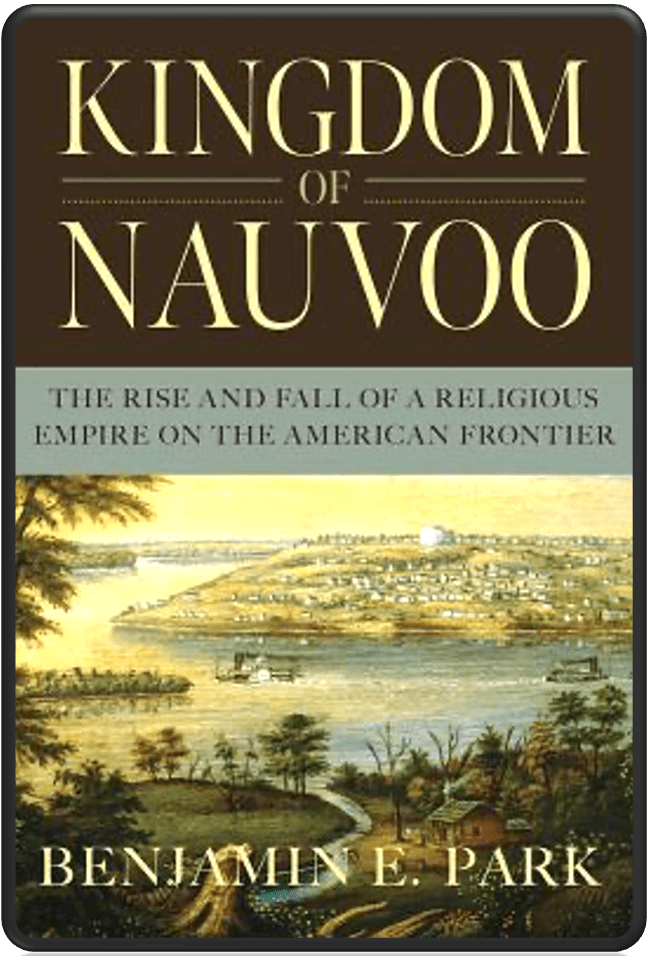

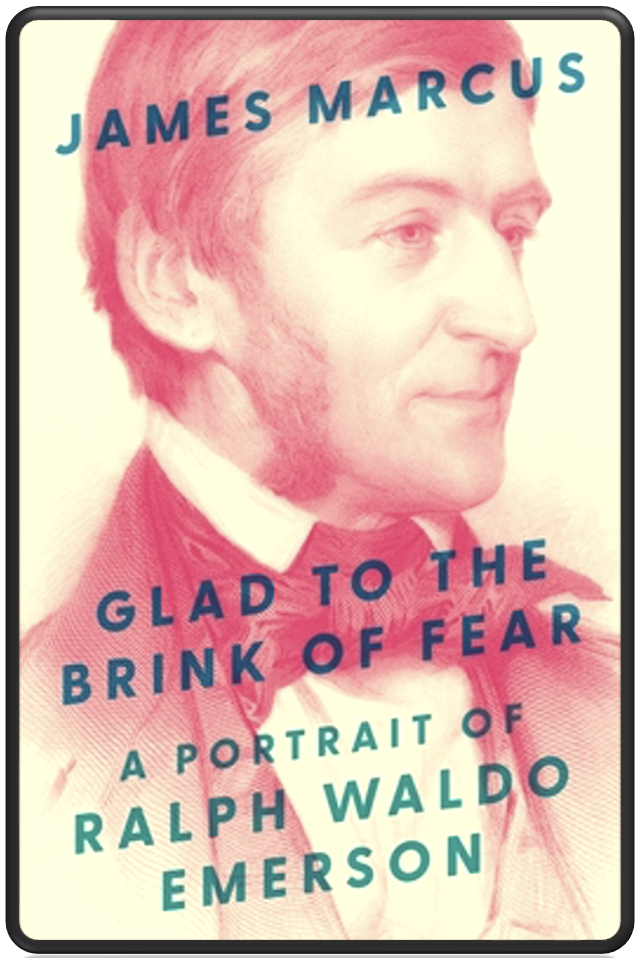
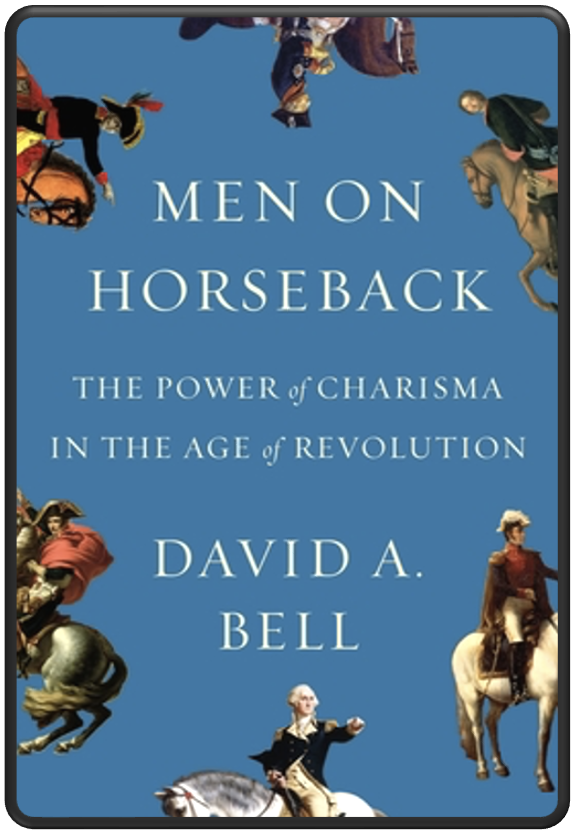
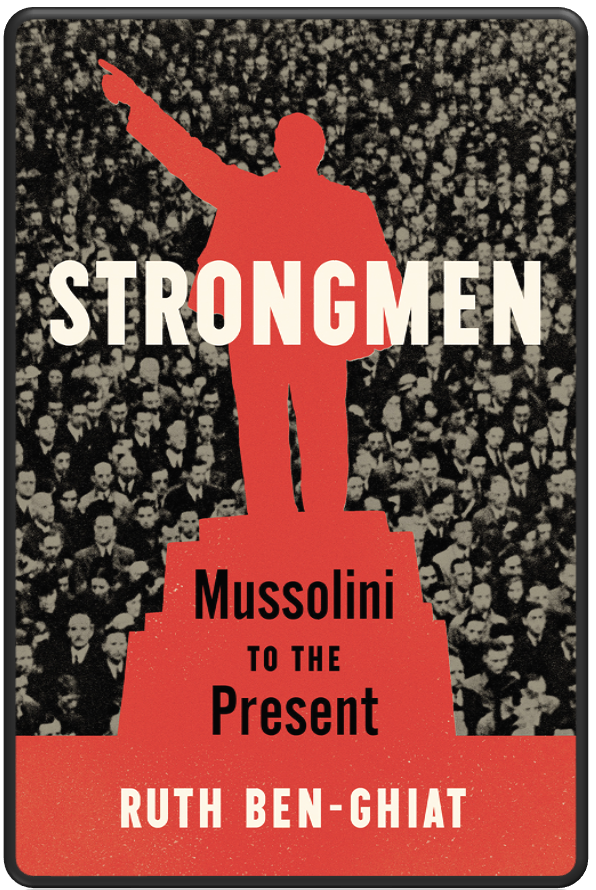





 Recommended Reading