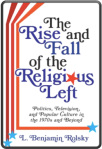
 L. Benjamin Rolsky is Adjunct Instructor in the History and Anthropology Department at Monmouth University and part-time lecturer in the Religion Department at Rutgers University. His The Rise and Fall of the Religious Left: Politics, Television, and Popular Culture in the 1970s and Beyond, charts the influence of producer, writer, and activist Norman Lear on the development of a religious forerunner—and eventually, counterpart—to Jerry Falwell’s Christian Right.
ECM: Your title suggests a sweeping movement history, but the book is mostly about Norman Lear. In what sense is this one public figure representative of a larger Religious Left?
LBR: Indeed it does, but it also depends on how we define “the religious left” moving forward in both academic and popular studies of American political life. Luckily, Columbia recognized the timeliness of the subject matter and suggested a title that reflected the growing interest in all things Religious Left. This book is a revised version of my dissertation, which examined the work of Norman Lear in the television industry and his not inconsiderable role in organizing the liberal religious resistance to the America represented in the Reagan presidency. The book tracks the rise and fall of the religious left through Lear’s television programming, non-profit activism, and theatrical performances in the public square. It argues that Lear is representative of the most significant characteristics of the Religious Left as I understand it, including defenses of the first amendment, religious diversity, and public reason as the civic bedrock of the public good.
In this sense, my interests are less in the “religious” figures that shaped ideas of either the Christian left or the Christian right in the 1970s, and more in how religious liberalism itself cultivated the conditions of its own eclipse by more conservative religio-political forces. In this sense, Lear’s degree of influence on the Religious Left during the early 1980s certainly spoke to his ability to lead as well as his willingness to think pragmatically, but it also pointed to the mainline’s utter lack of success in making its vision of America and its public life palatable to the masses in a conservative age. Despite their proximity, the victories of the 1960s were but a distant memory by the time Carter and Reagan had recast American politics in a born again key.
ECM: How would you characterize Lear’s personal religious practice, and how did it animate his politics?
LBR: Lear’s personal religious practice animated his politics in so far as it made possible the framing of his various television programs as didactic. Compared to the “electronic church” of the late 1970s, Lear arguably used the American sitcom genre as the backdrop for his “electronic classroom.” This form of communication possessed a civil religious understanding of the public square such that its most influential inhabitants would be mainline in denomination and progressive in theological sensibility. Not unlike their early 20th century forebears of the social gospel, religious liberals like Lear saw society in obligatory terms, having forged the public square itself out of sheer determination and a form of civic vigilance. In this sense, Lear’s personal practice informed his decision to frame debates and arguments in the name of the public interest instead of positing the one and only moral option. While the latter’s polarizing nature was built for the realm of politics and conservatives social actors therein, belief in such a level of certainty has never been the strength of the religious left—quite the opposite in fact.
ECM: Lear is perhaps most famous for his work on All in the Family, which you identify as a comment on the cultural politics of the early 1970s. Why is the cultural emphasis important, and how did it inform the still nascent culture wars?
LBR: As I argue in the text, the cultural emphasis is important because we arguably cannot understand the nature of religio-political encounter during this period, or even our own, without such a framework. The Culture Wars are nothing if not the utter and complete contestation of culture itself—from what it comprises, to who determines such categorical certainty. The events of the 1960s single handedly recalibrated the nature of American political life according to a cultural register. This meant that the personal had become the political in the sense that the typical subjects of political discourse began to reflect less what the GDP should be, and more with what unfolded in the privacy of one’s own home.
Stagflation certainly still lay ahead in these regards, but on the whole the transition from the 1960s to the 1970s ushered into American public life a concern with and a deployment of various forms and definitions of culture, popular and otherwise. In other words, the cacophony known as the public sphere found a peculiar coherency around issues pertaining to the body, and its subsequent regulation in courts of law and public opinion. Lear’s All in the Family literally embodied this type of politically charged programming in the name of the public interest.
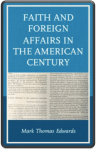 Mark Thomas Edwards is Associate Professor of US History and Politics at Spring Arbor University, where he researches the intersection of religion, politics, and diplomacy in the United States. In his new book,
  The late John F. Woolverton, an Episcopal priest, taught church history at Virginia Theological Seminary, the College of William and Mary, and the University of Texas. After his passing in 2014, his
  Duncan Ryūken Williams is Professor of Religion and East Asian Languages & Cultures at the University of Southern California, where he
  Darren Dochuk is Associate Professor of History at the University of Notre Dame. In his new book,
  Shane Claiborne is the author of nine books; a co-founder of
 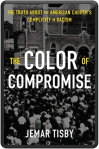 Jemar Tisby is a Ph.D. candidate in the Department of History at the University of Mississippi. In his new book,
 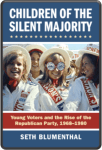 Seth Blumenthal is Senior Lecturer in the College of Arts and Sciences at Boston University. In his new book,
 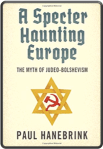 Paul Hanebrink is Associate Professor of History at Rutgers University. In his new book,
 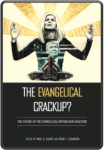 Paul A. Djupe is Associate Professor of Political Science at Denison University. He is the former editor of the journal Politics & Religion, and current editor of Religious Engagement in Democratic Politics, a new book series from Temple University Press. With Ryan L. Claassen, he is co-editor of
 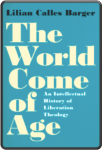 Lilian Calles Barger is an independent historian, speaker, and podcast host. In her new book,
  Robert Hudson is a recognized Bob Dylan scholar, a member of the International Thomas Merton Society, and a veteran editor. In his
  Christopher C. Brittain is Dean of Divinity and Margaret E. Fleck Chair in Anglican Studies at Trinity College, University of Toronto. Andrew McKinnon is Senior Lecturer of Sociology at the University of Aberdeen. In their book,
  Alan Noble is Assistant Professor of English at Oklahoma Baptist University and editor-in-chief of Christ and Pop Culture. In his
  Rachel Held Evans is a New York Times best-selling author of four books, each covering changes and developments in her Christian faith. Her most recent,
