
 Melissa Rogers is Visiting Professor at the Wake Forest School of Divinity and a nonresident senior fellow at the Brookings Institution. She served as President Obama’s executive director of the White House Office of Faith-Based and Neighborhood Partnerships from 2013 to 2017. In her new book, Faith in American Public Life, she examines a wide variety of issues pertaining to faith and law, tracing the boundaries of acceptable religiosity in American public life.
ECM: This book provides a thorough examination of important legal questions pertaining to First Amendment religious protections. What motivated you to write it?
MR: I wrote the book because I believe the rules that apply to religion’s role in American public life are critically important, yet they have often been mischaracterized and misunderstood. One often hears that the United States Supreme Court has kicked religion out of the public square, that presidents cannot talk about their faith, or that public schools must be religion-free zones, for example. None of that is true. The book seeks to serve as an accessible guide to these issues, one that I hope will be useful to government officials and religious and other civil society leaders alike. I also wrote the book to warn against certain threats to religious pluralism and freedom, the most serious and urgent of which is hostility against and attacks on minorities in this country, including religious minorities.
ECM: When President Bush opened the Office of Faith-Based and Community Initiatives in 2003, critics suggested that it marked an inappropriate mixing of faith and politics. Were they wrong about that?
MR: The office President George W. Bush opened broke new ground, but not as much as critics feared or supporters claimed. For the first time, a White House office had the word “faith” in it. It was certainly not the first time, however, that the job description of some White House staff included outreach to the religious community or work on issues where religion, law, and public policy intersect. During the Clinton administration, for example, the Office of Public Liaison included staff whose job was to engage with religious leaders and organizations, the portfolio of the deputy of the Domestic Policy Council included policy issues touching on religion, and the White House Counsel’s Office included staff who were scholars on church-state issues.
Having a White House office with the word “faith” was unprecedented, but it was not unconstitutional. The Constitution prohibits the government from advancing or denigrating religion, preferring one faith over another, or becoming excessively entangled with religion. As long as a governmental office respects such limits, there is nothing unconstitutional about having an office of faith-based and neighborhood partnerships, even in the White House.
ECM: To what degree is it appropriate for a president to practice a faith while in office?
MR: Presidents do not have to leave their faith behind when they take the oath of office. They may continue to practice their faith, including by attending houses of worship and speaking about their faith when they choose to do so. As Supreme Court Justice John Paul Stevens recognized, “when [government] officials deliver public speeches, we recognize that their words are not exclusively a transmission from the government because those oratories have embedded within them the inherently personal views of the speaker as an individual member of the polity.” Government officials should always speak about their religious beliefs and practices in ways that are consistent with the spirit of the Constitution. They should make clear, for example, that they will protect the right of every American to practice a faith, or not, as they choose.
Read the whole thing at Religion & Politics.
 Mark A. Noll is Professor Emeritus of History at the University of Notre Dame. The author or editor of over thirty books, Noll is legendary in the field. Alongside George M. Marsden and David W. Bebbington, he is co-editor of
  Hilde Løvdal Stephens is Visiting Associate Professor of English at the University of Southeastern Norway. In her new book,
  Robin Globus Veldman is Assistant Professor of Religious Studies at Texas A&M University. In her new book,
  Thomas S. Kidd is the Vardaman Distinguished Professor of History at Baylor University. In his new book,
  L. Benjamin Rolsky is Adjunct Instructor in the History and Anthropology Department at Monmouth University and part-time lecturer in the Religion Department at Rutgers University. His
  Mark Thomas Edwards is Associate Professor of US History and Politics at Spring Arbor University, where he researches the intersection of religion, politics, and diplomacy in the United States. In his new book,
  The late John F. Woolverton, an Episcopal priest, taught church history at Virginia Theological Seminary, the College of William and Mary, and the University of Texas. After his passing in 2014, his
  Duncan Ryūken Williams is Professor of Religion and East Asian Languages & Cultures at the University of Southern California, where he
  Darren Dochuk is Associate Professor of History at the University of Notre Dame. In his new book,
  Shane Claiborne is the author of nine books; a co-founder of
 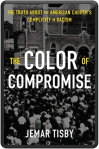 Jemar Tisby is a Ph.D. candidate in the Department of History at the University of Mississippi. In his new book,
 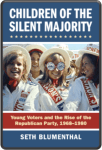 Seth Blumenthal is Senior Lecturer in the College of Arts and Sciences at Boston University. In his new book,
 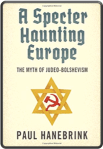 Paul Hanebrink is Associate Professor of History at Rutgers University. In his new book,
 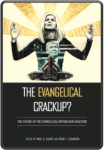 Paul A. Djupe is Associate Professor of Political Science at Denison University. He is the former editor of the journal Politics & Religion, and current editor of Religious Engagement in Democratic Politics, a new book series from Temple University Press. With Ryan L. Claassen, he is co-editor of
  Recommended Reading